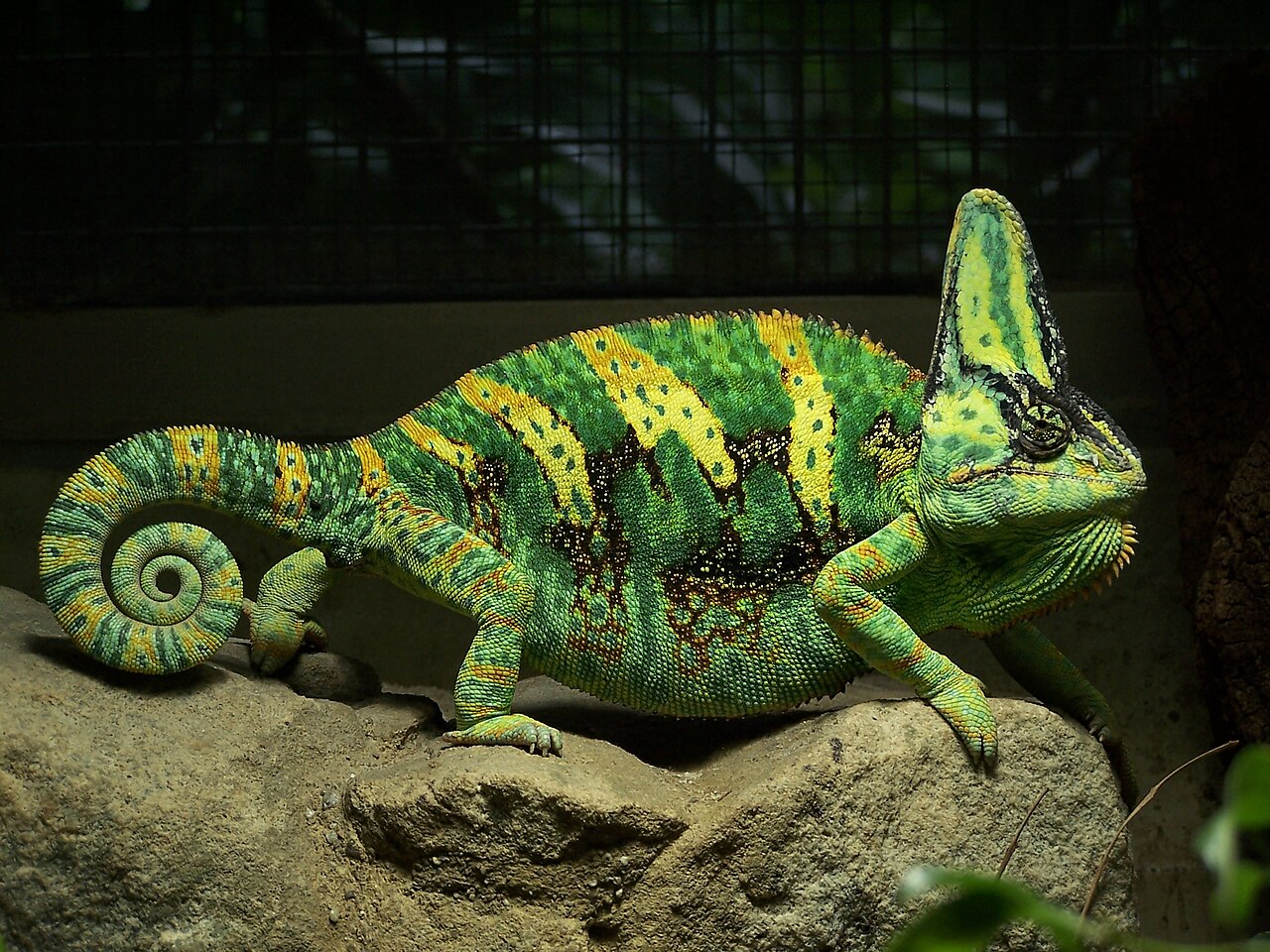
Chameleons are arboreal hunters that need flying or climbing prey to trigger their spectacular tongue-strike feeding behaviour. Variety is especially important for chameleons, and hydration is a key nutritional consideration.
Rankings
| Rank | Feeder | Score | Notes | |
|---|---|---|---|---|
| undefined | undefined | undefined/undefined | ||
| undefined | undefined | undefined/undefined | ||
| undefined | undefined | undefined/undefined | ||
| undefined | undefined | undefined/undefined | ||
| undefined | undefined | undefined/undefined | ||
| undefined | undefined | undefined/undefined | ||
| undefined | undefined | undefined/undefined | ||
| undefined | undefined | undefined/undefined | ||
| undefined | undefined | undefined/undefined | ||
| undefined | undefined | undefined/undefined |
Verdict
🎯
Our VerdictChameleons thrive on a rotation of silkworms, locusts, and hornworms as primary feeders — this trio covers nutrition, enrichment, and hydration. Supplement with BSFL for calcium and crickets/roaches for variety. Never rely on a single feeder species.
References
- Finke, M.D. (2002). “Complete nutrient composition of commercially raised invertebrates.” Zoo Biology, 21(3), 269–285.
- Oonincx, D.G.A.B. & Dierenfeld, E.S. (2012). “An investigation into the chemical composition of alternative invertebrate prey.” Zoo Biology, 31(1), 40–54.